Our Process
- 1
Book Visit
Tell us what you are seeing in your basement and pick a time that works for you.
- 2
Find Source
We inspect walls, floors, drains, and the grading around your home to trace where water gets in.
- 3
Fix Problem
Our contractors install the right drainage, sealing, or pump system for your home.
- 4
Stay Dry
We share simple upkeep steps and offer follow-up support when needed.
Why do Reynoldsburg basements take on water?
Reynoldsburg basements take on water because the city is full of homes from the 1960s through the 1990s and sits in the Blacklick Creek watershed in southeastern Franklin County. Census-based sources put the median Reynoldsburg home between the late 1970s and the mid-1980s, depending on the source, and about one in five homes was built between 1940 and 1969. A house of that age is 40 to 60 years old, and its original sump pump, footing drain, and wall coatings have usually reached the end of their expected life.
Heavy rain adds to the load. Storms that drop a lot of water quickly can overwhelm streets, yards, and storm drains faster than they can empty. When water cannot leave the surface, it soaks in next to the foundation.
The result is two different problems that people often mix up: slow seepage through walls and floors after wet weather, and sudden water entering from the outside during a flash flood. We treat them differently, and the next sections explain how.
What basement water problems are most common in Reynoldsburg?
The most common everyday problems come from age and from drainage that was never built for today’s storms. These are the ones we check first:
- Aging sump pumps: original pumps that stick, run constantly, or have no battery backup
- Floor-wall joint seepage: a damp strip along the base of the wall after a wet week
- Cracks in walls and slabs: hairline cracks that leak after heavy rain
- Downspouts at the wall: roof water landing within a few feet of the foundation
- Window wells: wells without drains that fill and spill through the window frame
Our guide to how long a sump pump lasts in an Ohio basement explains why a pump from the 1990s deserves a closer look, and what basement waterproofing costs in Columbus shows how repairs are usually priced.
Can water proofing stop a Reynoldsburg basement from flooding in a flash flood?
Water proofing can reduce seepage and handle groundwater, but it cannot stop floodwater that enters from the outside at full force. Flash flooding hit streets and yards near Nocturne Road and Briarcliff Road in Reynoldsburg, and more than two weeks later families were still clearing out damaged homes and fighting mold, according to local reporting. A drain system and pump are built for groundwater and moderate seepage, not for water pouring in through windows, doors, and the street.
- What helps: grading, downspout extensions, window well covers and drains, a correctly sized pump, and a battery backup
- What does not: no interior system can promise a dry basement when floodwater is deeper than the drain and the pump can move
- What to check: whether your address is in a mapped flood hazard area, and whether your insurance covers flood, which standard homeowners policies often exclude
We tell homeowners plainly which category their problem falls into, and we do not sell a repair for a problem it will not solve.
How do Reynoldsburg’s flat lots change the basement water proofing plan?
Flat lots change the plan because water needs a built path out. On a slope, gravity moves it. In Reynoldsburg, the repair usually has to create the route, and the outlet matters as much as the drain.
- Surface first: grading, gutter extensions, and downspout piping reduce how much water reaches the wall
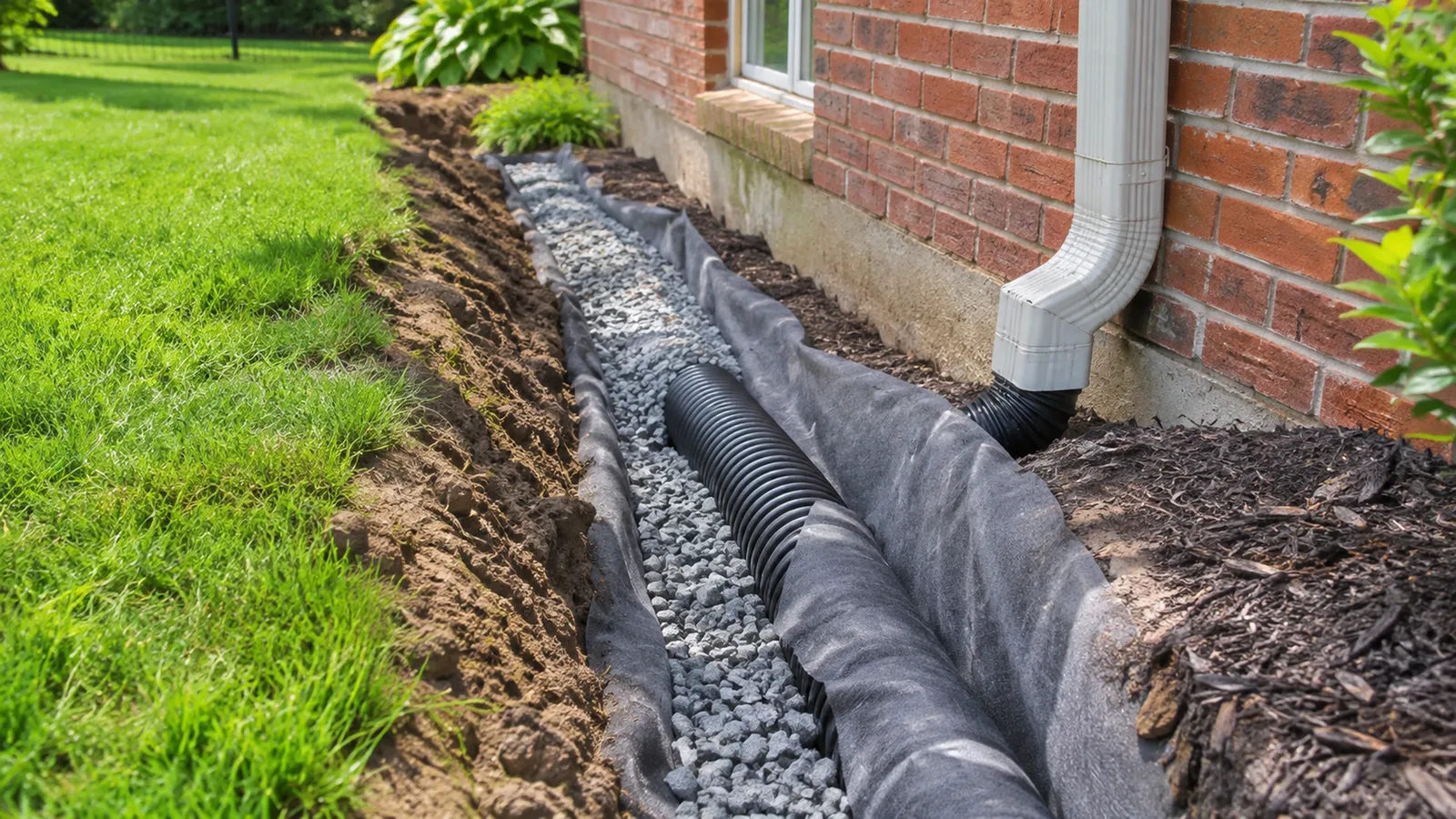
- Footing level: a French drain or exterior basement waterproofing intercepts water before it enters
- Under the slab: interior drainage relieves pressure and sends water to a sump pump pit
We do not publish a soil percentage for Reynoldsburg, because soil changes from lot to lot and we found no reliable city-wide figure. We look at how water behaves at your home and size the repair to match.
What does Reynoldsburg require for sump pump discharge?
We could not find a Reynoldsburg ordinance that spells out sump pump discharge, so we do not cite one. As a general rule across central Ohio, sump pump water belongs on the storm side, not in the sanitary sewer.
- Never connect a sump pump or downspout to the sanitary sewer or a floor drain
- Discharge onto your own lot, away from the foundation, or to an approved storm outlet
- Keep discharge from flowing onto a neighbor’s property or across a sidewalk where it can freeze
Rules and permits change, so we check with the city for the correct outlet before we choose a discharge point.
How much does basement water proofing cost in Reynoldsburg?
We found no published study of basement water proofing prices in Reynoldsburg, so we do not quote an area average. Census data list the median value of an owner-occupied Reynoldsburg home at $230,300, so cost matters. National cost guides commonly place gutter and grading fixes at the low end, interior drains and sump pumps in the middle, and full exterior excavation at the high end. We measure the walls and quote in writing, line by line, so you can see which steps solve the problem and which can wait.
What happens during a Reynoldsburg basement inspection?
A Reynoldsburg inspection looks at the basement and the yard together, because where the water starts decides what will last. We usually check:
- Grading and slope around the foundation
- Gutters, downspouts, and where each one discharges
- Interior walls, cracks, and the floor-wall joint
- The sump pit, float, check valve, and pump condition
- Window wells, doors, and low spots that let outside water in
If the cause is a downspout or a clogged well, the fix may be small. If water is entering at the footing, we explain the drainage options and price them separately.
What should you do in the first 48 hours after flooding in a Reynoldsburg basement?
Dry the basement within 24 to 48 hours and document everything. The EPA says mold usually will not grow in materials dried within that window, and photographs help with insurance and with finding the source.
- Stay out of standing water until the power is off, and never touch electrical equipment while wet
- Move belongings off wet floors, then run fans and a dehumidifier
- Take dated photos of water lines, damage, and the pump
- Call your insurer early, and ask what your policy covers
- Avoid painting or sealing a wet wall, which hides the evidence
If floodwater came from outside, the order of work is dry out first, then find out why water entered, then decide on prevention.
How can Reynoldsburg homeowners keep a basement dry between storms?
Keeping a basement dry in Reynoldsburg means moving roof water away and keeping the pump ready. The habits that matter most are:
- Extend downspouts at least 10 feet from the house, which is the University of Maryland Extension guidance for homes with basements
- Slope the soil away from the wall by about six inches over the first ten feet, and fill settled spots
- Keep gutters and window wells clear and drained
- Test the sump pump twice a year, and add a battery backup
- Keep valuables off the floor in storm season, and store papers in plastic bins
Do renters and landlords in Reynoldsburg handle basement water differently?
Yes, because roughly four in ten Reynoldsburg homes are renter-occupied. Census data put the owner-occupied rate at 60.8 percent. If you rent, report water to your landlord in writing right away, with dated photos. Repairs to the structure and drainage usually fall to the owner, and documenting early protects your belongings and your deposit. Landlords who act quickly avoid mold and larger damage, and we can provide a written scope and quote for any property we inspect.
How long does basement water proofing take in a Reynoldsburg home?
Grading and downspout fixes can be done in a day, and a sump pump replacement often takes a few hours. Most interior drainage systems take one to three days. Exterior drainage takes longer because the crew has to dig along the wall, and it depends on the weather.
How do you choose a basement water proofing contractor in Reynoldsburg?
Choose a contractor who shows you where the water will go before work begins. Ask for these items:
- The repair described in writing, with price per foot or per unit
- A sketch or photo of the drain route and the discharge point
- Proof of liability insurance; the contractors we work with carry insurance coverage, and you can ask for details
- What finished walls, flooring, and landscaping will be repaired afterward
Compare bids line by line, and be cautious of a quote that is far below the others without a clear reason.
Not sure we cover your address? We serve Reynoldsburg and nearby areas. We confirm coverage and the next available appointment for every address before any work is scheduled.