Our Process
- 1
Book Visit
Tell us what you are seeing in your basement and pick a time that works for you.
- 2
Find Source
We inspect walls, floors, drains, and the grading around your home to trace where water gets in.
- 3
Fix Problem
Our contractors install the right drainage, sealing, or pump system for your home.
- 4
Stay Dry
We share simple upkeep steps and offer follow-up support when needed.
Why do Hilliard basements get wet?
Hilliard basements get wet mostly because the ground is flat and slow to drain, and the water has to go somewhere. Census data put the median Hilliard home at 1997 construction, so many homes are now about 29 years old, and the city’s own comprehensive plan describes Hilliard’s terrain as relatively flat. A geotechnical report for the Franklin Street project in Old Hilliard found clay, silt and clay, and silty clay beneath the surface fill. Clay holds water close to the foundation instead of letting it soak away.
Hilliard also sits between two watersheds. The Scioto River watershed runs along the eastern edge, with Hayden Run and several drainage ditches. The western edge lies in the Big Darby Creek watershed, which covers about 6.7 square miles of the city. Water on a flat lot moves slowly toward those ditches, and in a wet week it can sit against a basement wall for days.
Columbus gets measurable precipitation on about 141 days a year, according to climate averages for the area. Saturated soil stays saturated, which is why a Hilliard basement that was dry in July can seep in March.
What basement water problems are most common in Hilliard?
The most common Hilliard problems start in the yard and show up in the basement. These are the ones we look for first:
- Grading toward the house: soil that has settled or been landscaped so rain runs to the foundation instead of away from it
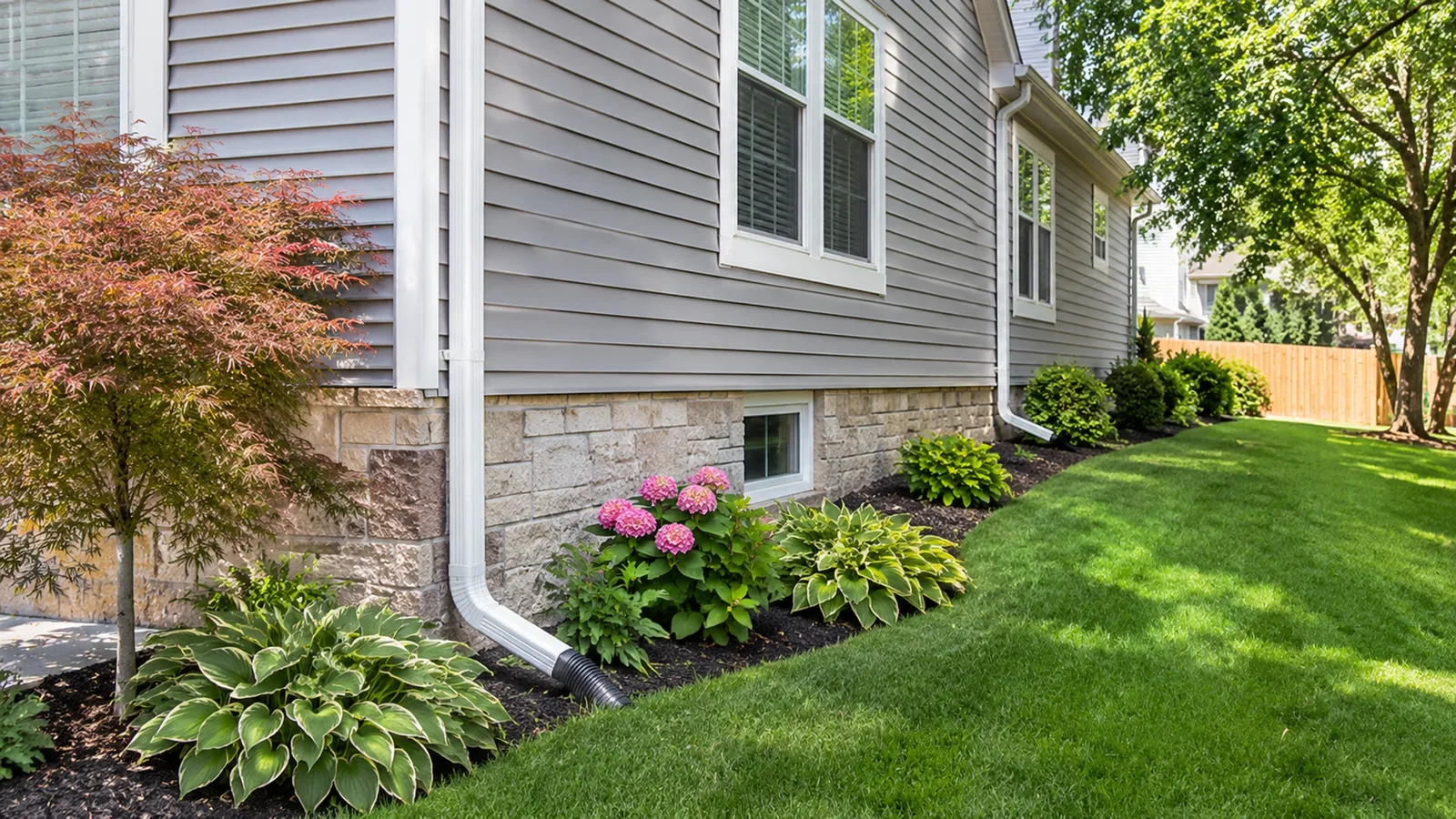
- Downspout discharge: gutters that empty beside the wall instead of carrying water several feet out
- Pump overload: sump pumps that run constantly after rain because the ground around the house stays saturated
- Wall and joint seepage: dampness along the base of a wall or at the floor-wall joint after a long wet spell
- Aging pumps: original 1990s pumps that are past the usual 7 to 10 year life
A pump that cycles every minute after rain is telling you the yard is sending it too much water. Our guide to what basement waterproofing costs in Columbus explains how much of the fix is usually outside versus inside.
How does Hilliard’s flat, clay ground change the fix?
Flat, clay ground changes the fix because gravity does less of the work. On a sloped lot, water leaves on its own. On a Hilliard lot, it needs a path, so the repair usually starts with giving it one.
- Grading and downspouts: the least expensive step, and it often reduces how hard the pump works
- Exterior drainage: a French drain or exterior basement waterproofing collects water at the footing and moves it away before it reaches the wall
- Interior drainage: interior drainage relieves pressure under the slab when water still gets through
Many Hilliard homes are in newer developments with storm sewers and shared swales, so the outlet matters as much as the drain. We check where the water will end up before we recommend a design, so a fix does not simply move the problem to a neighbor’s yard.
Should a Hilliard basement be fixed from the inside or the outside?
Fix it from the outside first when the water starts in the yard, and from the inside when it comes up through the floor or wall joint. Outside work stops water before it reaches the basement, and inside work manages the water that does. Many Hilliard basements use both.
- Water only after rain, with downspouts or grading nearby: start outside
- Damp strip at the floor-wall joint: inside drain and a working pump
- Cracks that leak: crack repair, then check the drainage that caused the pressure
- Finished basement with hidden dampness: find the entry point before opening walls
How much does basement water proofing cost in Hilliard?
Hilliard basement water proofing ranges from a few hundred dollars for downspout and grading changes or a pump swap to several thousand for drainage along the foundation. We found no Hilliard-only price study, so these are national ranges that we confirm on site:
- Replacing a sump pump: about $308 to $748, according to Angi
- Exterior French drain: about $46 to $55 per linear foot, according to HomeBlue
- Excavated exterior waterproofing: $78 to $110 per linear foot, according to HomeBlue
- Interior weeping tile or drain: $60 to $120 per linear foot, according to HomeAdvisor
Census data list the median value of an owner-occupied Hilliard home at $360,000, so a drainage repair is usually a small share of what the house is worth. We measure the walls on site and quote in writing before work starts.
What happens during a Hilliard basement inspection?
A Hilliard inspection covers the yard and the basement together, because where the water starts decides which repair lasts. We usually look at:
- Grading and slope around the foundation
- Gutters, downspouts, and where they discharge
- Interior walls and floor joint for entry points
- Sump pit, float, and pump performance
- Window wells and any low spots that hold water
If the cause is a downspout or a clogged well, the fix may be small. If water is entering at the footing, we explain the drainage options and price them separately so you can compare.
What are the signs of yard water entering a Hilliard basement?
Water that comes from the yard leaves a pattern you can read. It tends to show at one corner or one wall, after rain, and close to where a downspout or low spot sits outside. Look for:
- Dark staining and white powder in a V shape below a downspout, which is a classic sign of roof water spilling at the foundation
- A damp strip at the base of one wall that grows after a storm and shrinks in dry weather
- Efflorescence, the white mineral salt left when water passes through block or concrete and evaporates, which returns after you wipe it off
- A musty smell that comes and goes with the weather
- A sump pump that runs for hours or days after rain stops
Water along every wall, or only mid-floor, points more toward groundwater under the slab than the yard.
What should you do in the first 48 hours after water shows up in a Hilliard basement?
Dry the basement within 24 to 48 hours and document the yard as well as the room. The EPA says mold usually will not grow in materials dried within that window, and a quick record of the outside helps us find the source.
- Move belongings off wet floors and away from walls, then run fans and a dehumidifier
- Take photos of the stains and water lines, with the date
- Walk the outside after the next rain and note which downspouts overflow, where water ponds, and how long it stays
- Check that the sump discharge outlet is clear
- Avoid painting or sealing a wet wall, which hides the evidence
How can Hilliard homeowners keep a basement dry between storms?
On a flat lot, keeping a basement dry means moving roof water and surface water away from the walls and keeping the pump ready. The habits that matter most are:
- Extend downspouts at least 10 feet from the house, which is the University of Maryland Extension guidance for homes with basements
- Slope the soil away from the wall by about six inches over the first ten feet, a common grading standard, and fill settled spots
- Keep gutters clean so they do not overflow beside the foundation
- Test the sump pump twice a year and confirm the outlet is clear
- Watch standing water in the yard after storms; if it lingers, it is telling you where the lot does not drain
The same rule applies to your neighbors. A pipe or extension that sends water toward a property line can create a problem next door, so aim it toward open yard or an approved drain.
Does Old Hilliard need different basement care than newer neighborhoods?
Old Hilliard needs a closer look at the foundation itself. Point2Homes data show about 2.6 percent of Hilliard homes were built before 1940, and the city’s comprehensive plan treats Old Hilliard as its own focus area. Older foundations in central Ohio are often stone, brick, or block with no modern footing drain, so they tend to seep through the wall and need a drainage plan as well as sealing. Newer neighborhoods usually start with grading, downspouts, and an aging pump.
How long does basement water proofing take in a Hilliard home?
Grading and downspout fixes can be done in a day, and most interior drainage systems take one to three days. Exterior drainage takes longer because the crew has to dig along the wall, and it depends on the weather. Clay soil that is wet is heavy and slow to dig, so we schedule exterior work for drier stretches when we can.
How do you choose a basement water proofing contractor in Hilliard?
Choose a Hilliard contractor who shows you where the water will go before work begins. Ask for these items:
- The repair described in writing, with price per foot or per unit
- A sketch or photo of the drain route and the discharge point, especially near property lines
- Proof of liability insurance; the contractors we work with carry insurance coverage, and you can ask for details
- What lawn, landscaping, and finished space will be repaired afterward
Compare bids line by line, and be cautious of a quote that is far below the others without a clear reason.
Not sure we cover your address? We serve Hilliard and nearby areas. We confirm coverage and the next available appointment for every address before any work is scheduled.