Why homeowners choose us
Fast Response
Quick scheduling and rapid help when water is actively entering.
Transparent Pricing
A clear quote after inspection and before any work starts.
Fully Insured
The contractors we work with carry insurance, explained before any work begins.
Local Expertise
Experienced waterproofing crews who know Central Ohio homes.
Our process
- 1
Dig Out
We expose the foundation wall down to the footing.
- 2
Seal Wall
The wall is cleaned, repaired, and coated.
- 3
Lay Drain
Drain tile and stone carry water away.
- 4
Backfill Grade
Soil is replaced and graded away from the house.
What does exterior basement waterproofing involve in a Columbus home?
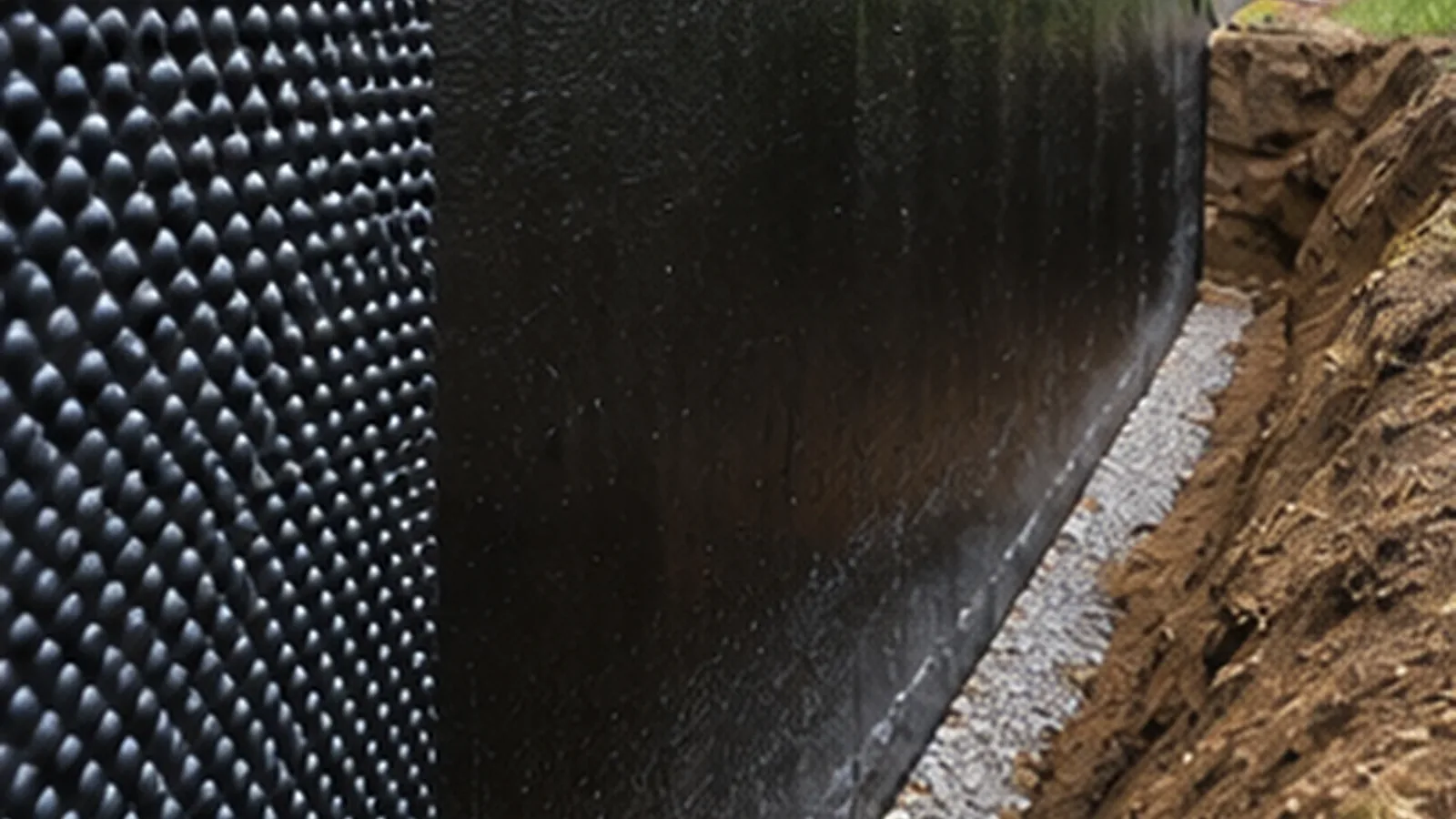
Exterior basement waterproofing means digging down to the footing, sealing the outside face of the foundation wall, and giving groundwater a drain to follow before it reaches the wall. It treats the problem from the soil side, so the wall stays dry instead of collecting water that then has to be pumped out. In a Columbus home the work usually covers one wall or the whole perimeter, depending on where water gets in.
A complete job follows this order:
- Mark the underground utilities, then excavate along the wall to the footing
- Clean the wall and repair cracks, holes, and the joint where the wall meets the footing
- Apply a waterproof membrane or coating to the outside of the wall
- Cover the membrane with a drainage board, often called a dimple mat, so it is not punctured during backfill
- Set or replace the footing drain in washed stone and connect it to a working outlet
- Backfill in layers with free-draining material, then restore the grade
The parts depend on each other. A membrane with no drain leaves water pressing against the wall, and a drain with no wall protection leaves cracks and joints exposed. A buried drain pipe with no working outlet does not control water either, so the discharge point is part of the design from the start.
Why do Columbus basements need exterior waterproofing?
Columbus basements need exterior waterproofing when water presses against the wall from outside often enough that interior fixes only manage the leak. The city gets about 39.31 inches of rain a year, and 2018 set a record at 55.18 inches. July is the wettest month at about 4.7 inches. When soil stays saturated, water pushes on the wall, and it finds every crack, joint, and pipe penetration.
The weather is getting heavier too. Ohio State researchers found that the number of days with more than 1.25 inches of precipitation rose 78% between 1951 to 1980 and 1981 to 2010. Franklin County also uses a 32-inch frost depth for construction, so the soil beside a basement wall freezes and thaws every winter, and that cycle widens small cracks and loosens old coatings. Older Columbus neighborhoods often have clay soil that drains slowly, and the original tar coating on a wall that old is rarely intact.
Water through a basement wall usually starts with wet soil, failed drainage, an open crack, or a break in the wall coating. If the same wall leaks after every heavy rain, or the wall is stone or brick, digging outside is often the lasting fix. If the water source is the roof or the yard, fixing gutters and grading comes first, and sometimes that is all you need.
How much does exterior basement waterproofing cost in Columbus?
Exterior waterproofing in Columbus most likely costs about $100 to $200 per linear foot, which puts a typical full project well into five figures. These are national numbers, not Columbus bids, because no local average has been published. This Old House lists excavation at $100 to $200 per linear foot, and its guide says to expect roughly $7,000 or more for exterior work. A 2021 Angi guide put full excavation at $10,000 to $20,000 or more, or $120 to $220 per linear foot. Our guide to basement waterproofing costs in Columbus puts these figures beside the other methods.
Individual parts have their own price tags. Angi lists liquid membrane at $3 to $6 per square foot, sodium bentonite at $3 to $4 per square foot, and sheet membrane at $1,500 to $3,000. French drain work runs $10 to $100 per linear foot on Angi, and a new perforated drain set in washed stone costs more in cost guides when the whole footing run is replaced. On a 120-foot perimeter, the per-foot range of $100 to $200 adds up to $12,000 to $24,000.
Price moves with wall height, soil, access, and what is on top of the dig. A deck, a concrete patio, or a driveway beside the wall adds removal and restoration. Crack or masonry repairs found once the wall is exposed add to the total as well. Foundation work done in the same dig, such as wall repair, costs less than opening the same wall twice. Ask for a written quote that splits out excavation, membrane, drain, backfill, and restoration so you can compare bids line by line.
Which membrane and drain system fits a Columbus foundation?
For most poured concrete or block walls in Columbus, a rubberized or sheet membrane covered by a dimple drainage board and tied into a footing drain gives the most dependable result. The membrane keeps water out of the wall, the board gives water a path down, and the drain carries it away. Skipping any one of the three weakens the other two.
The common wall materials compare like this:
- Liquid or rubberized membrane: sprayed or rolled on, and it can bridge small hairline cracks
- Sheet membrane: a self-adhering sheet with a consistent thickness, often used on straight, clean walls
- Sodium bentonite: a clay that swells when wet and seals itself, but it is rigid, does not bridge cracks, and is less effective under high water pressure
- Dimple board: goes over any of these to protect the membrane and channel water downward
Wall type matters. U.S. Waterproofing recommends an exterior membrane for stone or brick walls and for finished block basements, while it suggests interior drain tile for ordinary seepage through a block wall. Block walls also have hollow cores that fill with water, which is a reason some contractors pair an exterior membrane with weep holes inside. The drain itself is usually 4-inch perforated pipe in washed stone, and it must lead to a daylight outlet or a sump. Ask the contractor what product is going on, how thick it is, and who stands behind it.
How long does exterior waterproofing take in Columbus?
An exterior waterproofing project in Columbus usually takes about three to ten days of work, depending on how much of the foundation is exposed. Contractor guides give wide ranges: one puts typical projects at three to seven days, another at five to ten days per side of the house, and a full perimeter on a larger home can run two to four weeks. Weather matters, since open trenches and rain do not mix.
The calendar before the dig matters just as much. Ohio law requires the person doing the digging to notify OHIO811 at least two working days before starting, and no more than 16 calendar days ahead, and the utilities then mark their lines. A contractor should handle that notice, and you can confirm it. The membrane itself has to cure before the board and backfill go on, and some systems need a day or two for that step.
Winter does not make the work impossible, but frozen ground slows digging and some coatings need minimum temperatures. Many contractors schedule exterior work in late spring through early fall for that reason. If water is coming in now, a temporary interior fix can hold the basement until the ground is workable. Ask any contractor for a timeline in writing, with the dig, membrane, drain, and backfill steps listed in order.
What happens to your yard, utilities, and permits?
The dig opens a trench along the foundation, so plants, patios, steps, and fences within the work zone will be removed or moved, and the yard is regraded when the trench is closed. The crew usually works one wall at a time. Expect heavy equipment access, spoil piles, and disturbed lawn for a few weeks after the work.
Utilities come first. Gas, water, electric, and communication lines often run near a house, which is why Ohio law requires digging notice. The Ohio811 call is free, the dig cannot begin until the utilities have marked their lines, and the marks last only as long as they stay visible. If you hire someone to dig, the contractor is the one required to place the call.
Permits vary by address, and exterior waterproofing is not a named permit category in the city sources we reviewed, so ask your contractor which office covers your home: Columbus building services, a suburb, or Franklin County. Work that touches plumbing, such as tying a drain into a sump or storm line, can require a plumbing permit. Columbus City Code section 1145.86 limits what can enter the storm sewer to stormwater, so a footing drain cannot be connected to the sanitary line. Daylight discharge or a sump pump are the usual outlets. Ask where yours will go before you sign.
Exterior or interior waterproofing: which fits a Columbus basement?
Exterior waterproofing stops water before it passes through the wall, while interior drainage manages water after it arrives, and for most Columbus basements the interior route is the lower-cost starting point. Polyguard describes the core difference as preventing infiltration compared with managing it. The exterior approach is more proactive, and the interior approach is more reactive, but either can do the job.
Cost explains most of the gap. Interior waterproofing typically runs $50 to $100 per linear foot, and exterior work runs $150 to $250 per linear foot, according to one cost guide. Contractor guides often say interior systems cost about a third less. Exterior work is worth the extra money in a few cases:
- Stone, brick, or poorly mortared walls that leak across the whole surface
- A finished basement you do not want to open up
- Walls where a new membrane can also be paired with crack or masonry repair
- Homes where the footing drain has collapsed or was never installed
Exterior systems have a drawback: once buried, a membrane is hard to inspect, and a puncture can compromise it. Ask whether the contractor would recommend a lower-cost option first, such as gutters, grading, a sump, or an interior drain. A contractor who explains why the wall needs digging, and shows where the water is entering, is a better bet than one who quotes the dig before looking.
How do you hire an exterior waterproofing contractor in Columbus?
Hire a Columbus exterior waterproofing contractor who inspects the wall, explains where the water is coming from, and puts the full scope in writing. Ask for itemized bids from at least three companies that separate excavation, membrane, drain, backfill, and restoration. Items to look for on every quote:
- The product being used, how thick it is, and whether a dimple board and footing drain are included
- Where the drain will discharge, and which permit or notice applies
- Who calls OHIO811 and who restores the lawn, patio, or steps
- A license or registration where your city requires one, and proof of liability insurance; the contractors we work with carry insurance coverage, and you should still ask to see it
- Warranty terms in writing, including whether it transfers if you sell the house
A written timeline and a payment schedule tied to finished steps protect you more than a large deposit does. Be careful with any quote that gives a total over the phone with no site visit, since excavation costs depend on depth, access, and what is on top of the soil. A good contractor will also tell you if the cheaper fix is the right one.
When to call a professional. Call if water comes through a wall after heavy rain, a wall bows or cracks horizontally, or a stone or brick wall leaks. Exterior work needs a site visit first.